Skiing in Korea for Beginners: Choose the Right Resort
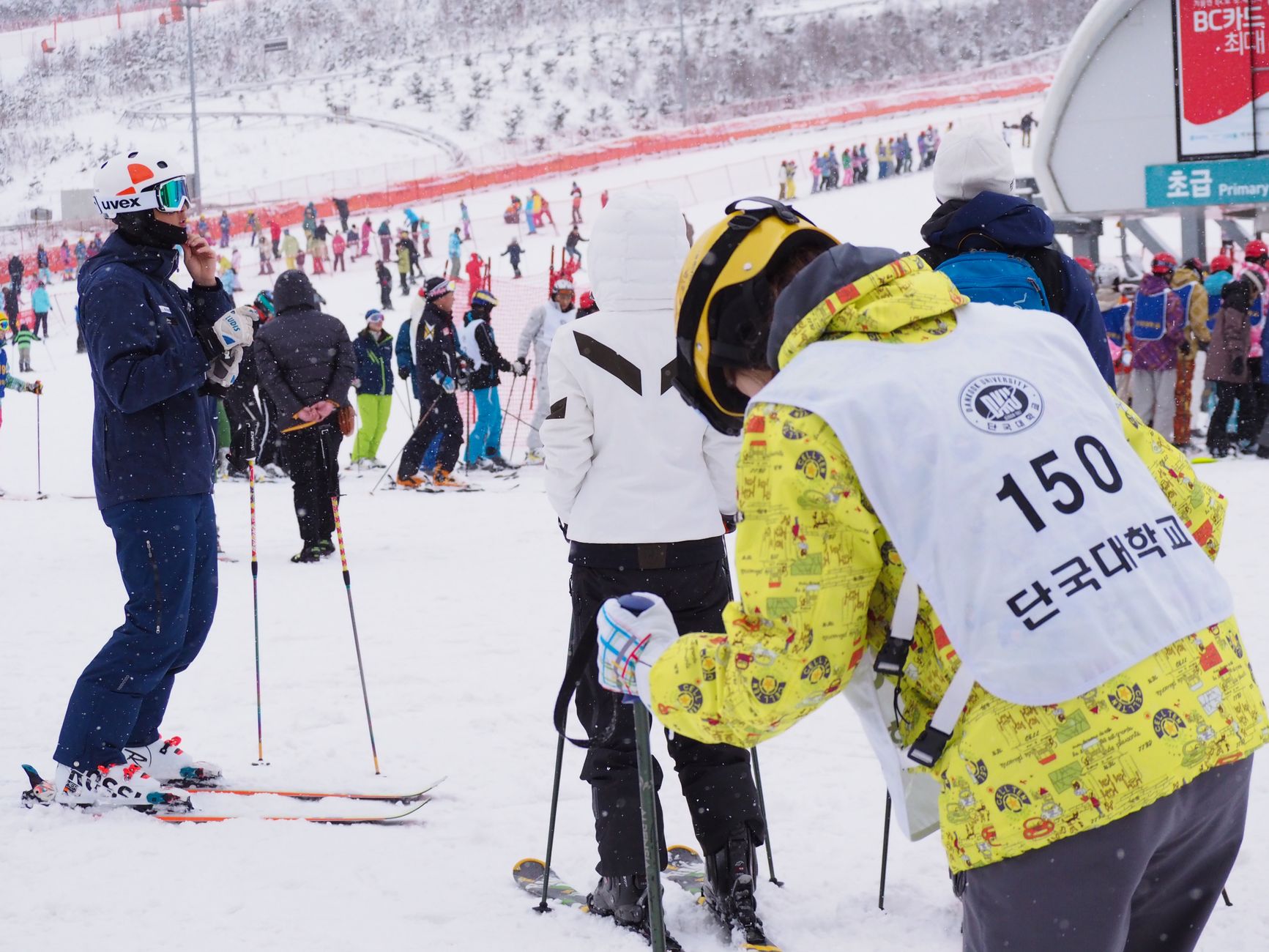
Skiing in Korea for beginners is easiest when you choose a resort with a clear beginner lesson, rental support, and transport you can confirm before booking. For most first-timers based in Seoul, a lesson followed by practice in the designated beginner area is a better goal than trying to cover the whole resort.
📌 Quick answer
- Choose a resort by travel time, beginner lesson language, and return transport—not by its biggest slope.
- Rent skis, boots, poles, helmet, and outerwear on site unless you already know your sizing.
- Book lessons and transport ahead during the Korean winter season, then confirm operating details with the resort.
This post contains affiliate links. We may earn a commission at no extra cost to you.
🎿 Skiing in Korea for beginners: choose the right setup
Treat your first ski day as a choice between a Seoul-based day trip, an overnight stay near a resort, or a larger resort as part of a longer winter itinerary. Ski packages may sell lift access, equipment rental, clothing rental, lessons, and transport separately, so read inclusions and exclusions before paying.
| Your priority | Better choice | Check before reserving |
|---|---|---|
| First ski experience | Beginner lesson package | Teaching language and lesson duration |
| Short Seoul visit | Organized day trip | Pickup point and return timing |
| Traveling with children | Resort with family services | Minimum age, guardian rules, clothing sizes |
| Confident skier in your group | Resort with varied runs | Separate lift access for each person |
| Flexible winter trip | Self-arranged visit | Shuttle, parking, and rental availability |
A simple resort shortlist
Visitors often compare Elysian Gangchon, Vivaldi Park, Yongpyong, and High1, depending on where they are staying and the kind of trip they want. Check the official websites of Elysian Gangchon, Vivaldi Park, Yongpyong Resort, or High1 Resort for the current season's opening dates, beginner-area access, lift status, lesson bookings, and shuttle details.
Use these four questions to narrow the list:
1️⃣ How much of the day will transport take? A beginner benefits more from calm practice time than from adding another run after a rushed arrival.
2️⃣ Can you book instruction you can follow? Look for an English-friendly group session or a private instructor option, and confirm this directly with the resort or tour operator.
3️⃣ Is the beginner area clearly separated? Your first runs should be on a gentle designated slope, not an easy-looking trail reached by a faster lift.
4️⃣ What happens if weather changes? Check the cancellation and weather policy before booking, especially for transport-inclusive products.
💡 Local tip: Reserve the lesson first and build the rest of the day around it. A lift pass is not useful if you arrive after your lesson has started or cannot collect rental gear in time.
For a useful starting point when comparing Seoul-area activity options, browse Seoul winter activity listings. Then verify the exact resort, inclusions, meeting point, and cancellation conditions before you commit.
🧭 If you are..., do this
- A first-timer with no snow-sport experience: Choose a lesson, rental, helmet, and a beginner-area ticket; focus on stopping and turning rather than covering the whole resort.
- A family with children: Select a resort after confirming child lesson eligibility, available clothing sizes, indoor rest areas, and whether an adult must remain nearby.
- A traveler with one free day in Seoul: Take an organized transfer only if the pickup and return location work with your hotel; otherwise, a shorter winter activity in Seoul may be less tiring.
- A budget-focused backpacker: Compare the total of transport, outerwear, equipment, lift access, food, and locker use—not just the advertised base package.
A beginner lesson is often the most useful upgrade. Instructors can teach the snowplow position, controlled stopping, getting up after a fall, and lift-area behavior in a safer order than trial and error with friends.
| Plan | What you arrange | Main advantage | Common problem |
|---|---|---|---|
| Guided day trip | One combined reservation | Less navigation | Tight schedule |
| Resort lesson day | Transport and lesson separately | More choice | Inclusions can be confusing |
| Overnight ski stay | Hotel and ski services | Less rushed | More packing |
| Companion-only visit | Food, sledding, or indoor activities | Non-skiers can join | Confirm access rules |
⚠️ Heads-up: A green or beginner-marked run is still a ski slope, not a moving walkway. If you feel anxious after the lesson, stay in the practice zone and ask the instructor which lift is appropriate.
🧤 What to rent, wear, and bring for a smooth first day

For first-time skiing in Korea, renting bulky equipment is usually simpler than traveling with it. Your rental counter may treat skis, boots, poles, helmet, jacket, pants, gloves, goggles, and lift access as separate items, so keep your booking confirmation ready and ask what is included.
What the rental items do
- Ski boots: These should feel snug around the heel and lower leg without causing sharp pain or numb toes. Stand up and bend your knees before accepting them.
- Skis and poles: Rental staff usually select a suitable setup after checking your height, ability, and sometimes shoe size.
- Helmet: Wear one even on the beginner slope. Falls at low speed can still be unpleasant.
- Jacket and pants: Water-resistant outer layers matter because beginner falls often mean sitting or kneeling in snow.
Pack this, even when renting
| Bring from your hotel | Why it matters | Skip this mistake |
|---|---|---|
| Long socks | Prevent boot rubbing | Thick, bunched-up socks |
| Base layer | Keeps you comfortable | Cotton that stays damp |
| Waterproof gloves | Hands touch snow often | Thin fashion gloves |
| Neck warmer | Helps in cold wind | Long loose scarf |
| Small bag and ID | Useful at lockers and rental | Carrying valuables on the slope |
Use thin or medium ski socks rather than piling on multiple pairs. Too much thickness can make boots tighter, reduce control, and create pressure points.
Dress in adjustable layers for winter outings because conditions can change between an outdoor slope, a heated shuttle, a rental room, and a cafeteria. A base layer, warm middle layer, and waterproof outer layer is easier to manage than one oversized coat.
💡 Local tip: Put your phone in an inner pocket or a zipped pocket close to your body. Cold batteries drain faster, and a dropped phone can disappear into soft snow surprisingly easily.
🚍 Plan transport and timing without rushing the snow
The biggest planning error is estimating only the road journey. Add time for finding the departure point, collecting gear, changing clothes, attending the lesson, using lockers, and returning rental equipment before your transport leaves.
For independent travel, check the chosen resort's official transport page first. Resort shuttles, public buses, and train-plus-bus connections can change by season, day of week, and reservation requirement.
A calm first-day sequence
1️⃣ The night before: Save booking vouchers offline, check your resort's current operating notice, and prepare socks, gloves, ID, and a card.
2️⃣ On arrival: Find the lesson desk or meeting point before joining a rental queue. Confirm where your group meets after changing.
3️⃣ Before skiing: Adjust boots, store bags in a locker, use the restroom, and listen to the instructor's lift and stopping instructions.
4️⃣ Before leaving: Return every rental item, collect your belongings, and arrive at the shuttle or bus pickup place early.
If you are using a transit card for part of your journey, the adult basic Seoul subway fare is ₩1,550 with a transit card, a rate introduced on June 28, 2025 by the Seoul Metropolitan Government. That fare is only for the subway base trip, not a resort transfer, so check the transport operator's current fare and reservation rules separately.
For broader trip logistics, this Korea apps guide for visitors without a Korean phone number can help you choose workable map, translation, and booking tools. Download what you need before leaving Wi-Fi, since ski-resort navigation is easier with a saved address and screenshots.
At the end of your transport planning, compare guided Seoul ski-day options with a self-arranged visit on total time and what they include. The right choice is the one that leaves enough daylight and energy for beginner practice.
💳 Understand packages, etiquette, and safety on the slope
There is no reliable single cost for skiing in Korea because resort dates, weekend demand, rental levels, lesson format, lift access, and transport vary. Check the current total on the chosen resort's official website or booking platform.
Read package wording carefully
| Package term | Usually means | Confirm this detail |
|---|---|---|
| Equipment rental | Skis, boots, and often poles | Helmet included or extra |
| Wear rental | Jacket and pants | Gloves and goggles included or not |
| Lift pass | Access to specified lifts or time | Beginner lift coverage |
| Group lesson | Shared instruction | Language, level, and group size |
| Transfer | Travel to the resort | Pickup, return, and missed-bus rule |
On the slope, give downhill skiers plenty of space because they may not see you approaching from behind. Stop only at the side where you are visible to others, never just below a hill crest or across a narrow section.
If you fall, move your skis and body to the side as soon as you safely can. Take a moment to reset rather than trying to stand quickly with skis pointing downhill.
For help while traveling, the Korea Tourism Organization operates the 1330 Korea Travel Hotline with English, Japanese, and Chinese support. For emergencies, call 119 for fire or ambulance services and 112 for police.
🎟️ Book ahead for a simpler beginner ski day
Reserve lessons, transport, and any resort-specific essentials before the day you want to ski, particularly on weekends and school-holiday periods. Your confirmation should identify the resort, date, meeting or redemption point, and included equipment or lift access.
Use this booking checklist before you pay:
- Does the product explicitly name the resort and date?
- Does it include beginner instruction, or is it transport only?
- Are equipment, clothing, helmet, and lift access listed separately?
- Is there a stated weather or cancellation process?
- What time must you be at the meeting point?
If you want to compare bookable activities before building your itinerary, look through winter day-trip availability from Seoul. Treat the listing as a planning tool, then read the latest terms and the named resort's official notices.
✅ Quick Checklist
✅ Confirm the resort's opening status, beginner slope, lesson language, and transport details on its official website.
✅ Save your voucher, resort address, pickup point, and return instructions offline.
✅ Wear a base layer and long socks; bring waterproof gloves, ID, and a payment card.
✅ Arrive early enough for rental fitting, lockers, and the lesson meeting point.
✅ Stay on the designated beginner area until you can stop and turn with control.
❓ FAQ
❓ Is skiing in Korea for beginners a good first skiing experience?
Yes, if you book a lesson and stay in the designated beginner area. Rentals, structured packages, and day-trip options can make a first visit straightforward; check current services with your chosen resort before going.
❓ Do I need to bring my own ski clothes?
No, many resorts or package providers offer outerwear rental, but inclusions vary. Bring your own base layer, long socks, and waterproof gloves for hygiene and comfort, then verify whether a helmet and goggles are part of your rental.
❓ Can I ski near Seoul in one day?
A day trip can work if you choose a resort and transport plan with realistic timing. Build in time for changing, rentals, the lesson, and equipment returns rather than treating it as only a journey from Seoul to snow.
❓ Should I ski or snowboard as a complete beginner?
Either is possible, but do not switch between them on the same first day. Choose based on the lesson you can book and what you genuinely want to learn.
✅ Final Thoughts
Skiing in Korea for beginners is most enjoyable when you keep the goal modest: learn safe basics, make a few controlled runs, and finish before fatigue turns into frustration.
- Choose logistics over hype: a clear lesson and simple transport are more valuable than the biggest resort map.
- Check every inclusion: rentals, clothing, helmet, lift access, and transport may be sold separately.
- Stay in the practice area: confidence comes from controlled stopping and turning, not from attempting a harder slope early.
Next step: shortlist two resorts or day trips, compare their current inclusions, and reserve the lesson option that fits your Seoul itinerary.
🧳 Free Korea trip tools


Comments
Post a Comment