Best Places to See Autumn Leaves in Korea: 12 Local Picks
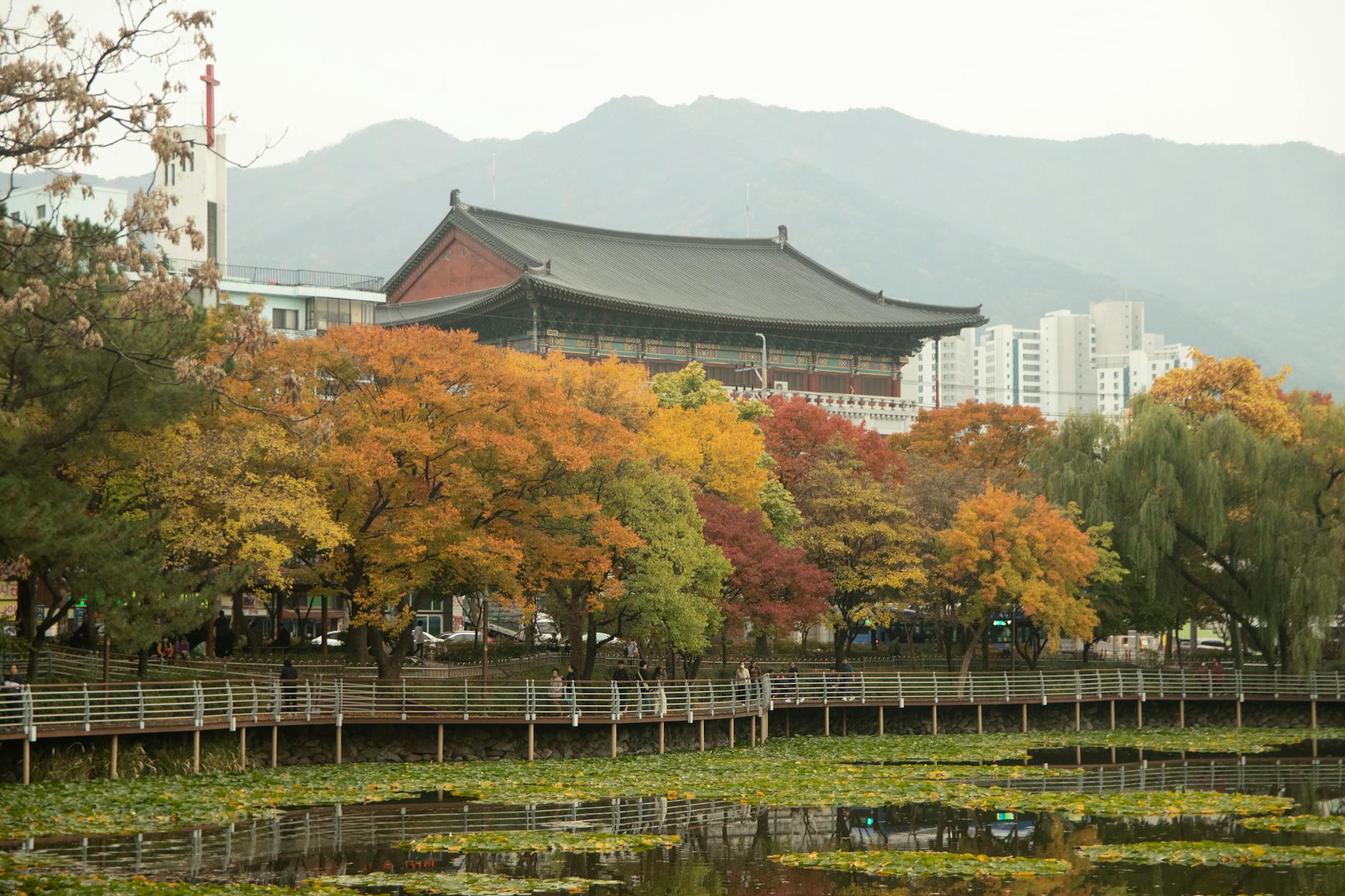
Best places to see autumn leaves in Korea range from palace-lined streets in Seoul to steep national-park valleys covered in red maples and golden ginkgo trees. This guide is for travelers who want to choose the right foliage destination, understand Korea’s short autumn window, and get there without wasting a precious clear day. We Koreans often call autumn foliage danpung (단풍), a word that covers the changing leaves as well as the seasonal ritual of going out to admire them. Use these local picks to match your trip with the scenery, walking level, and city access you prefer.
📌 Quick answer
- The best places to see autumn leaves in Korea include Seoraksan, Naejangsan, Bukhansan, Seoul’s palaces, Nami Island, and Jirisan.
- Mountain color usually arrives first, while Seoul parks and palace grounds often look best later.
- Check a current foliage forecast shortly before your visit, then choose a weekday morning for calmer trails and clearer photos.
🍁 Best Places to See Autumn Leaves in Korea at a Glance
If you are choosing between destinations, start with how much time you have. Seoraksan National Park is the classic dramatic choice, while Seoul’s royal palaces are better for a short city break; Naejangsan is the most immersive maple-focused day out. The table below gives a practical first comparison rather than a strict ranking.
| Place | Best for | Landscape | Time needed |
|---|---|---|---|
| Seoraksan National Park | Big mountain views | Rocky peaks, maples | Full day or overnight |
| Naejangsan National Park | Intense red maples | Forest roads, temple grounds | Full day |
| Gyeongbokgung | Easy Seoul foliage | Palace, ginkgo, architecture | 2–3 hours |
| Bukhansan National Park | Active hikers | Granite ridges, mixed forest | Half to full day |
| Nami Island | Relaxed walks | Tree avenues, riverside | Half to full day |
| Jirisan National Park | Quiet nature escape | Broad mountain valleys | Full day or longer |
Choose your foliage style
For first-time visitors: Pair a Seoul palace with a nearby park or walk around Samcheong-dong. You get autumn color, traditional hanok (한옥) houses, cafés, and simple public transport in one compact area.
For serious hikers: Choose Seoraksan, Bukhansan, Jirisan, or Odaesan. Korean mountain trails can involve long stone steps, uneven ground, and sudden temperature changes, so scenic does not always mean easy.
For families or slower travelers: Nami Island, Seoul Forest, Olympic Park, and the park paths around Changdeokgung are easier choices. Flat paths matter in autumn because popular foliage sites get busy, and a gentle route gives you more freedom to pause.
Local tip: In Korean search results, try the word danpung (단풍) plus a place name, such as “Seoraksan danpung.” You will often find recent trail photos, visitor notices, and local map reviews more quickly.
🗓️ When to Go for the Best Autumn Color
The best places to see autumn leaves in Korea do not peak all at once. Color generally starts in higher northeastern mountains, moves south and toward lower elevations, and then settles into Seoul’s parks, palace grounds, and city streets. Weather can move the timing by days or longer, so treat any calendar as a planning guide, not a guarantee.
| Period | Areas often worth watching | Typical color | Smart trip idea |
|---|---|---|---|
| Early autumn | Seoraksan and high Gangwon trails | Early reds and yellows | Overnight mountain trip |
| Mid-autumn | Central mountains, Bukhansan, Odaesan | Mixed peak color | Seoul plus day hike |
| Late autumn | Seoul palaces, city parks, southern areas | Golden ginkgo, lingering maple | Urban photography days |
| After strong wind or rain | Any destination | Leaves may drop quickly | Choose parks and streets instead |
How to read Korean foliage timing
There are two useful stages. First color means some leaves have started changing; peak color means a larger part of the forest is at its most vivid. For photographs, peak color sounds ideal, but a few days before or after can be more enjoyable because paths are less crowded and the trees still look layered in green, orange, red, and gold.
Use this simple planning method:
1️⃣ Check an official national park notice, weather forecast, or recent map reviews about one week before your target day.
2️⃣ Keep one backup destination at a lower elevation. If a mountain is past peak, Seoul gardens, palace grounds, and ginkgo streets may still be beautiful.
3️⃣ Go early, especially on weekends. Locals tend to start mountain hikes in the morning because daylight is shorter and buses, cable cars, and trail entrances can become crowded.
What to wear and bring
Autumn mornings can feel much colder than sunny afternoons, particularly above the city. A light layering system is more useful than one heavy coat: breathable top, warm middle layer, light windproof shell, water, and shoes with grip.
Do not assume a famous leaf-viewing path is an easy promenade. In national parks, bring an offline map, a small snack, and a charged phone; reception can be inconsistent in valleys. If you need mobile data before leaving your hotel, compare your options with this Korea eSIM, SIM, and pocket Wi-Fi guide.
🏞️ Best Places to See Autumn Leaves in Korea Beyond Seoul
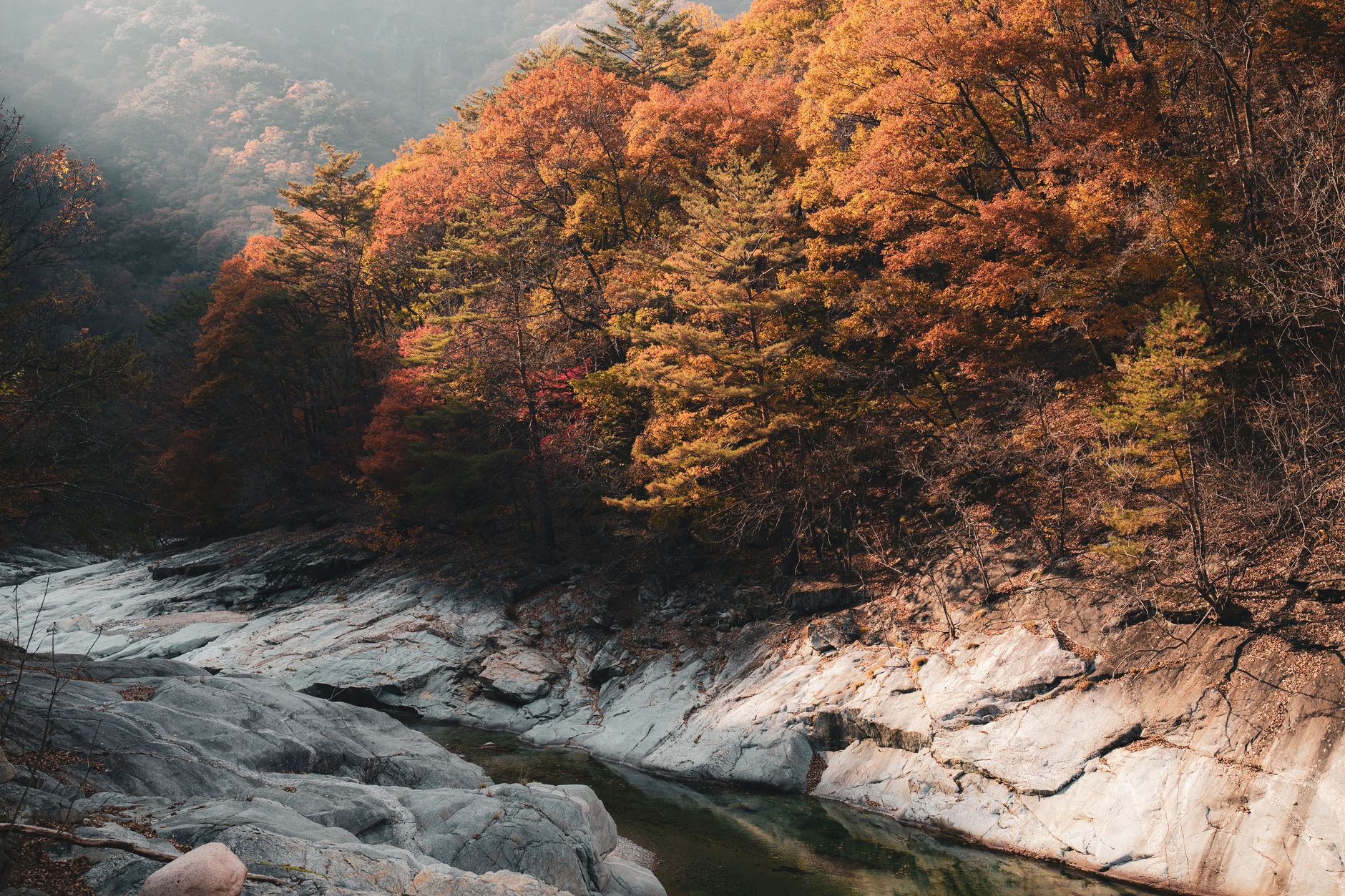
For the fullest autumn experience, head into the mountains. These are the best places to see autumn leaves in Korea when you want more than a few colorful trees: think temple roofs under maples, long forest roads, ridgelines, streams, and misty morning valleys.
1. Seoraksan National Park (설악산)
Seoraksan is Korea’s headline autumn destination for a reason. Sharp granite formations rise above dense woodland, so the red and orange leaves have a dramatic backdrop rather than blending into a flat forest.
A practical approach is to stay near Sokcho or arrive early enough for a full day. The lower valley walks work for many visitors, while longer hikes demand fitness and proper footwear; always choose a trail based on conditions, not just a beautiful social-media photo.
💡 Local tip: If Seoraksan is on your list, build flexibility into your itinerary. Clear weather makes an enormous difference there, and a weekday visit is usually far more comfortable than a weekend or public holiday.
2. Naejangsan National Park (내장산)
Naejangsan is famous for maple leaves, or danpung namu (단풍나무), and feels especially atmospheric around its temple approaches. The colors can appear very dense and saturated, which is why it is a favorite for travelers who picture classic crimson Korean autumn scenes.
Expect heavy demand during the main foliage period. Arrive early, follow any crowd-control guidance, and be patient around transport hubs; the pleasure of Naejangsan is in strolling slowly rather than trying to rush through every viewpoint.
3. Odaesan National Park (오대산)
Odaesan offers a softer, calmer kind of beauty than Seoraksan. Its forest paths and Woljeongsa Temple area are good for travelers who prefer tall fir trees, golden leaves, and a contemplative temple setting over exposed rocky climbs.
For a simple example route, walk around the temple area first, then continue only as far as your energy and daylight allow. This makes Odaesan a strong choice for mixed-age groups.
4. Jirisan National Park (지리산)
Jirisan is vast, so it suits travelers who can stay longer or who want a less rushed southern mountain trip. The area has many trailheads and nearby villages, making it possible to choose anything from a gentle valley walk to a demanding ridge hike.
Because the park is so large, do not search only “Jirisan.” Pick a specific entry point, confirm current access conditions, and calculate travel time from your accommodation before committing.
5. Daedunsan (대둔산) and other central options
Daedunsan is known for rugged rock scenery and elevated viewpoints, while Songnisan offers temple-and-mountain scenery around Beopjusa. Both can be rewarding alternatives when the most famous parks are too crowded or do not fit your route.
The key comparison is simple: Seoraksan is more iconic and farther northeast; central parks can be easier to combine with cities in the middle or southwest of the country. In every case, check official trail closures after rain or strong wind.
🚇 Seoul Autumn Leaves: Palaces, Parks, and Easy Day Trips
You do not need to leave the capital to enjoy the best places to see autumn leaves in Korea. Seoul’s strength is variety: you can see foliage around royal architecture in the morning, eat bibimbap (비빔밥) for lunch, and walk beside the Han River before sunset.
Royal palaces: Gyeongbokgung and Changdeokgung
Gyeongbokgung (경복궁) has broad courtyards, mountain views, and seasonal trees behind its gates. Changdeokgung (창덕궁) is especially appealing for its Secret Garden, known as Huwon (후원), where ponds, pavilions, and older trees create a quieter, more layered scene.
Reserve or check entry procedures in advance when required, and respect marked paths. These are cultural heritage sites, so we locals appreciate visitors who enjoy the setting without climbing walls, stepping into planted areas, or blocking narrow paths for long photo sessions.
Bukhansan and Inwangsan for city hikers
Bukhansan National Park sits at Seoul’s edge and gives you a genuine mountain day without an intercity journey. Inwangsan is shorter and more urban, with views over the city walls and rooftops; it is a good choice if you want foliage plus skyline photos.
For both, start with a realistic route. 1️⃣ Check the elevation and distance. 2️⃣ Download a map. 3️⃣ Turn back early if weather, crowds, or daylight make the route less safe than expected.
Nami Island, Seoul Forest, and Olympic Park
Nami Island is popular for tree-lined paths and riverside walks, particularly for travelers who want an easy, photogenic outing. Seoul Forest and Olympic Park are more convenient for a relaxed city day, and their wide pathways are useful if you are traveling with children, strollers, or limited mobility.
For payments on transport, cafés, and smaller purchases, review this practical guide to cards, cash, and T-money in Korea. Having a T-money card ready makes spontaneous park-and-palace hopping much easier.
Local tip: Ginkgo trees are beautiful but can drop fruit with a strong smell in late autumn. Admire the golden canopy, but watch where you step and avoid placing bags on the ground beneath fruiting trees.
🧭 How to Plan a Smooth Foliage Day
A good autumn leaves itinerary is not about ticking off the most locations. The best places to see autumn leaves in Korea are most enjoyable when you give yourself time for changing weather, queues, photo stops, and a warm meal afterward.
A reliable one-day formula
1️⃣ Pick one main destination. For example, choose Seoraksan or a Seoul palace-and-park circuit, not both on the same day.
2️⃣ Leave before peak crowds. This is especially important for mountain buses, park entrances, and popular photo paths.
3️⃣ Add one nearby food stop. Look for local specialties rather than crossing the city for a restaurant that is trending online.
4️⃣ Keep an indoor backup. A museum, café street, market, or temple hall can save a wet-weather day.
| Traveler type | Best base | Suggested plan | Main caution |
|---|---|---|---|
| First Korea trip | Seoul | Palace + park + Han River | Do not overpack the day |
| Hiker | Sokcho or mountain town | One national park trail | Check closures and daylight |
| Couple or photographers | Seoul or Nami area | Early walk + late golden hour | Weekends get busy |
| Family group | Seoul Forest or Olympic Park | Flat paths + flexible meal stop | Bring layers and snacks |
| Southern itinerary | Jirisan or Naejangsan area | Park plus nearby town | Allow extra transit time |
Etiquette that makes the day better
Korean autumn sites are shared spaces, not just photo backgrounds. Keep your voice low near temples, carry out rubbish, stay on marked trails, and let faster hikers pass on narrow uphill paths.
Drones may be restricted in parks and heritage areas, and tripod use can be discouraged in crowded places. If a scenic spot has a queue, take a few photos and move along; this small courtesy helps everyone enjoy the leaves.
✅ Quick Checklist
✅ Check current foliage reports and weather a few days before you go.
✅ Choose one main destination plus one nearby backup activity.
✅ Wear layers, comfortable shoes, and bring water for any mountain route.
✅ Start early on weekends and follow trail, temple, and park rules.
✅ Keep a T-money card and phone battery ready for flexible transport.
FAQ
❓ Which month is best for autumn leaves in Korea?
Autumn color generally appears from early to late autumn, with mountain areas changing before Seoul and many lower-elevation locations. The exact best month depends on your destination and that year’s weather, so check recent local updates rather than relying on a fixed date.
❓ Is Seoraksan or Naejangsan better for autumn leaves?
Choose Seoraksan for powerful mountain views, rocky peaks, and a more adventurous national-park feeling. Choose Naejangsan if your priority is dense red maple scenery and atmospheric temple approaches; both are extremely popular at peak time.
❓ Can I see autumn leaves in Seoul without hiking?
Yes. Gyeongbokgung, Changdeokgung, Seoul Forest, Olympic Park, and many university or neighborhood streets offer beautiful seasonal color with little or no hiking. Palaces are particularly good because autumn trees frame traditional buildings in a way that feels distinctly Korean.
❓ Are national parks crowded during foliage season?
They can be very crowded, particularly on weekends, public holidays, and around peak-color forecasts. Go on a weekday if possible, arrive early, and have a backup plan in case transport queues or weather affect your route.
❓ What should I search in Korean for foliage updates?
Search danpung (단풍), meaning autumn foliage, with the park or city name. Adding jeongbo (정보), meaning information, or hyeonhwang (현황), meaning current status, can help you find timely notices and recent visitor updates.
Final Thoughts
The best places to see autumn leaves in Korea are not limited to one famous mountain. A well-timed palace walk in Seoul can be just as memorable as a national-park hike, especially when it fits your travel pace and weather.
- Choose mountains for dramatic views, longer walks, and early-season color.
- Choose Seoul for easy access, palace scenery, and late-season flexibility.
- Check current conditions and protect time for one destination instead of racing between several.
As your next step, shortlist two destinations—one mountain and one city option—then check the latest foliage and weather updates shortly before you travel.
🧳 Free Korea trip tools


Comments
Post a Comment