Korean BBQ Etiquette for Foreigners: 10 Easy Rules
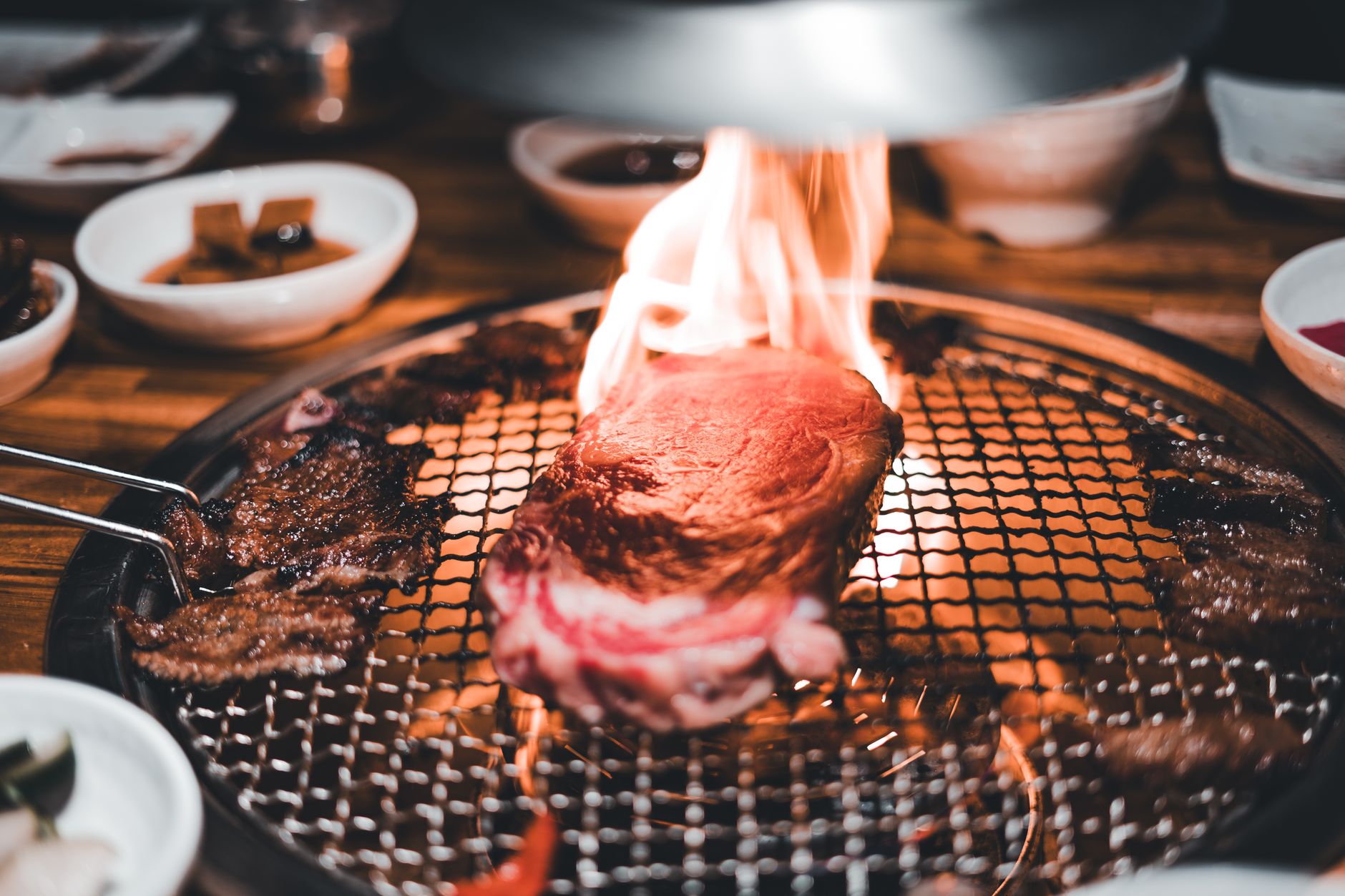
Korean BBQ etiquette for foreigners is much easier once you understand that the table is designed for sharing, not for individual plates. This how-to guide explains what to order, who usually handles the grill, how to build a wrap, and how to avoid the small mistakes that can make a busy meal feel awkward. We Koreans do not expect visitors to know every custom perfectly; a polite, relaxed attitude matters far more than performing a rule. Think of Korean barbecue as a collaborative meal where the food, conversation, and timing all belong to the group.
Start With the Basic Korean BBQ Etiquette for Foreigners
The first rule of Korean barbecue is simple: share the meal and follow the table’s rhythm. Most restaurants put a grill in the center because everyone is meant to reach for the same cooked meat, side dishes, and accompaniments. You may receive several small plates of banchan (반찬), meaning side dishes, such as kimchi, pickled radish, seasoned greens, or potato salad. These are usually refilled during the meal, although availability and refill policies vary by restaurant.
A few basics will make you immediately comfortable:
- Wait until meat is cooked before eating it. Raw slices may arrive beautifully arranged, but they are for the grill, not sashimi-style eating.
- Share the banchan (반찬). Use your chopsticks to take a reasonable portion onto your own plate rather than hovering over one dish for a long time.
- Keep your personal plate tidy. It is normal for it to become a little crowded with meat, garlic, sauce, and lettuce, but take small portions as you go.
- Do not worry about eating every side dish. Try what appeals to you, but no one expects you to clear every small bowl.
- Ask if you need help. A friendly “How should we eat this?” is completely fine, especially at a restaurant known for a particular cut or sauce.
The center grill also creates a practical distinction: raw meat should stay on the raw-meat plate or grilling area, while cooked meat goes to a clean plate or the edge of the grill. If the restaurant provides tongs and kitchen scissors, they are normally for handling and cutting meat, not for eating. Use your own chopsticks or spoon for food that is ready to eat.
| At the table | What locals usually do | Easy visitor approach |
|---|---|---|
| Side dishes | Share them throughout the meal | Take small portions, then go back for more |
| Grill tongs | Use them for raw or cooking meat | Avoid putting them in your mouth or on your personal plate |
| Cooked meat | Move it away from the hotter center | Take a piece once it is clearly cooked |
| Lettuce wraps | Build them in one or two bites | Keep wraps small enough to eat neatly |
| Staff help | Accept it, especially at busy places | Let them demonstrate the restaurant’s preferred method |
Local tip: If a staff member starts turning or cutting the meat, let them take the lead. Many Korean BBQ restaurants are proud of their ideal cooking method, and the help is service—not a sign that you did something wrong.
Korean BBQ Etiquette for Foreigners When Ordering and Grilling
Ordering is often the moment when first-time visitors feel unsure. Korean BBQ menus may list pork cuts, beef cuts, set menus, soups, rice, and noodle dishes separately. A good approach is to begin with one or two types of meat, then add more after you see how hungry the group is. This prevents a crowded grill and reduces waste.
Common choices include samgyeopsal (삼겹살), thick pork belly; moksal (목살), pork neck or shoulder; galbi (갈비), marinated ribs; and deungsim (등심), a beef loin cut. The best choice depends on the restaurant. A pork-focused place may do pork much better than beef, while a premium beef restaurant may recommend a sequence of cuts.
A simple ordering strategy
For a group trying Korean BBQ for the first time, use this order:
- Choose the restaurant specialty first. If the sign, menu, or staff emphasizes pork belly, start there.
- Add one contrasting cut. For example, pair fatty pork belly with a leaner pork neck cut, or unseasoned meat with a marinated option.
- Order rice, stew, or cold noodles later. These are often best toward the end, when you want something warming or refreshing with the remaining meat.
- Reorder only when needed. It is common to add another serving gradually rather than placing a huge order at once.
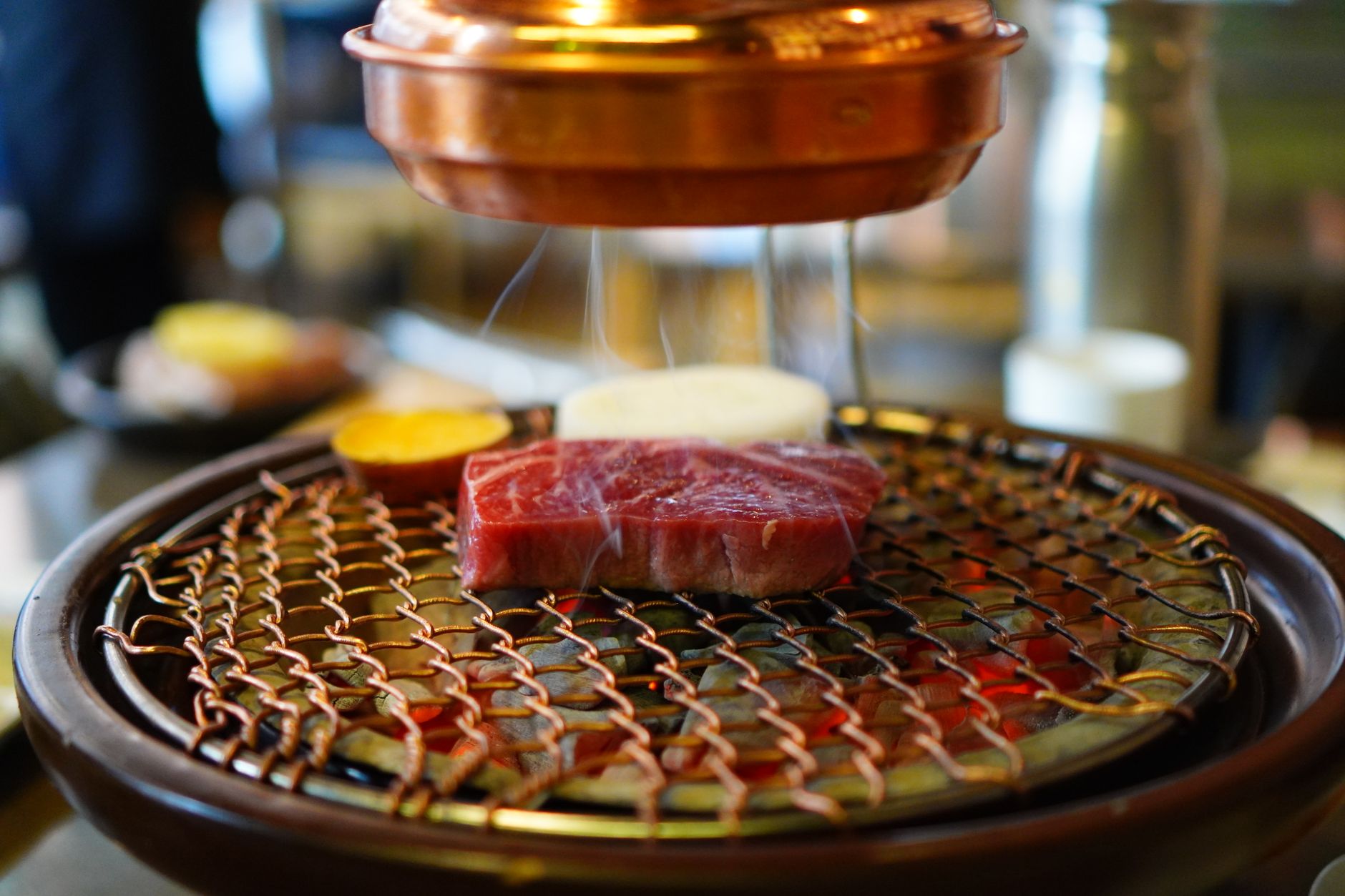
At the grill, do not pile on every slice immediately. Meat needs contact with the hot surface and a little space to brown properly. Thick pork belly is often cut into bite-size pieces with scissors after it begins to cook. Thin beef cooks much faster and should be watched closely so it does not dry out.
If someone in your group seems to be managing the grill, offer help once rather than repeatedly reaching in. At a meal among friends, one person often becomes the unofficial griller because they enjoy it or know the restaurant’s style. In a mixed group, it is polite to ask, “Would you like me to take a turn?” Then follow their answer.
What to do with garlic, kimchi, and mushrooms
Restaurants may provide whole garlic cloves, kimchi, onions, mushrooms, or rice cakes for the grill. These can be delicious, but they cook at different speeds. Put them around the cooler edge rather than directly under thick meat. Garlic can burn quickly, and kimchi can release liquid, so give both some room.
A concrete example: place pork belly in the center, set sliced mushrooms and onion around it, and add garlic closer to the edge. Once the pork is cooked, move it to a less-hot section, then use the newly open center for your next batch. This small rotation keeps food from scorching and makes the shared grill easier for everyone to use.
Local tip: Do not flip meat every few seconds. Let one side brown, turn it once, and then cut or move it when it is cooked. Constant flipping usually makes the grill crowded and slows down the meal.
Korean BBQ Etiquette for Foreigners: Eating, Wraps, and Sauces
The most enjoyable part of Korean BBQ etiquette for foreigners is learning that there is no single “correct” bite. Korean diners combine meat with sauces, vegetables, rice, and side dishes in different ways. Still, a few common combinations will help you understand what is on the table.
A classic ssam (쌈), or wrap, starts with lettuce or perilla leaf. Add a piece of grilled meat, a little ssamjang (쌈장), a savory soybean-and-chili paste, and perhaps garlic, kimchi, or rice. Fold it loosely and eat it in one bite if possible. A giant wrap that falls apart is not rude, but smaller wraps are more practical and let you taste the balance of ingredients.
Three easy ways to eat your first pieces
- Meat and salt: Dip a plain piece of beef or pork lightly in salt mixed with sesame oil. This is a good way to taste the meat itself.
- Meat and sauce: Try ssamjang (쌈장) with pork, especially pork belly. Use a small amount at first because it is flavorful.
- A lettuce wrap: Add meat, a small dab of sauce, and one extra ingredient such as garlic or kimchi. Keep it manageable.
Do not feel obligated to put rice inside every wrap. Some people do; others eat rice separately with a spoon. Similarly, you do not have to use every sauce on the table. Sesame oil with salt, ssamjang (쌈장), soy-based dipping sauce, and sometimes mustard sauce may all appear, depending on the restaurant and meat.
Chopsticks are generally used for meat and side dishes, while a spoon is used for rice, stew, and soup. It is fine to switch naturally between them. Avoid sticking chopsticks upright in a bowl of rice, because this resembles a memorial offering and can feel uncomfortable in Korea. Also, try not to pass food directly from your chopsticks to another person’s chopsticks; place it on a shared or individual plate instead.
Sharing is important, but it does not mean you must constantly serve others. If you are with Korean hosts, they may place a cooked piece of meat on your plate as a gesture of care. A simple “thank you” is enough. If you are dining with close friends, offering a well-cooked piece to someone else is friendly, but do so with clean utensils or the grill tongs rather than chopsticks you have already eaten from.
Pace yourself with the meal
Korean BBQ is rarely rushed. The table may progress from meat to rice, then stew or naengmyeon (냉면), chilled buckwheat noodles. Cold noodles can be particularly refreshing after rich grilled pork or beef. Rather than ordering everything at the beginning, leave room for this final stage.
For example, after a few rounds of pork belly, you might share a stew and add cold noodles. Eat a little noodle broth with the meat, or enjoy it as a palate-cleansing finish. This is common, flexible, and far more satisfying than treating barbecue as only a plate of meat.
Drinks, Age Respect, and Paying Without Awkwardness
Drinking customs are the part of Korean BBQ etiquette for foreigners that often gets exaggerated online. The real principle is consideration, especially when dining with older people, work colleagues, or hosts. Among close friends of the same age, meals are usually much more casual.
If alcohol is being served, someone may pour soju (소주), Korea’s clear distilled spirit, or beer for others. In a formal setting, use two hands when receiving or pouring a drink for someone older. One hand can hold the bottle or glass while the other lightly supports your wrist or elbow. This signals respect, not stiffness.
Here is a useful comparison:
| Situation | Best approach |
|---|---|
| Dinner with close friends | Pour casually, check whether others want a refill |
| Meal with older relatives or senior colleagues | Receive and pour with two hands; let seniors begin first |
| You do not drink alcohol | Say politely that you do not drink and choose water or a soft drink |
| A toast happens | Raise your glass, make eye contact, and take only the amount you are comfortable with |
You never need to drink alcohol to be polite. A clear, friendly “I don’t drink, but cheers” is enough. Do not pressure another person to drink, either. Korean dining culture can be warm and celebratory, but modern groups vary widely in how much they drink.
When the meal ends, ask about the bill before walking to the register. In many casual groups, one person pays first and friends settle their shares later, but this is not universal. Splitting evenly can be convenient; paying for what you ordered may make more sense in another group. If a Korean host insists on paying, offer once or twice sincerely, then thank them rather than turning it into a long argument.
Cards are widely accepted, but it is smart to carry a backup payment method for small businesses or market-style restaurants. Review the practical basics of paying with cards, cash, and T-money in Korea before your trip so you know what to expect beyond the barbecue table.
Local tip: At the counter, do not assume the bill will be split automatically. Ask politely if separate payment is possible, or have one person pay and settle among yourselves afterward if that is easier.
FAQ
Do I have to cook the meat myself at Korean BBQ?
Not always. Some restaurants have staff who cook or assist with the meat, while others leave the grill entirely to diners. Watch what the staff does when the meat arrives, and ask for help if you are unsure about doneness.
Is it rude to ask for extra side dishes?
Usually not, especially for common banchan (반찬) at a sit-down restaurant. Ask politely, and understand that refill options can differ by restaurant, ingredient, or time of day. It is better to request a small refill than take far more than you can eat.
Can I eat Korean BBQ alone?
Yes, though some traditional barbecue restaurants are designed around shared portions and may have minimum orders or limited solo seating. Look for places that specifically welcome solo diners, offer lunch sets, or have individual grills. If you go alone, order modestly and choose cuts that cook quickly.
What if I cannot eat spicy food?
You can still enjoy Korean barbecue easily. Plain grilled pork or beef, lettuce, rice, sesame oil with salt, and many non-spicy side dishes are good choices; just ask whether marinades, stews, or kimchi are spicy before ordering.
Should I tip at a Korean BBQ restaurant?
Tipping is not a standard expectation in Korea. Pay the displayed bill unless the restaurant clearly presents an optional service arrangement, which is uncommon in ordinary local restaurants. A warm thank-you is the normal way to show appreciation.
Final Thoughts
Korean BBQ etiquette for foreigners is not about memorizing a strict list of rules—it is about joining a shared meal thoughtfully. Once you understand the flow, even a lively, smoky restaurant becomes easy to navigate.
- Share with awareness: Take reasonable portions, keep raw and cooked utensils separate, and make room on the grill for everyone.
- Follow the restaurant’s lead: Staff may know the best way to cut, cook, and serve a specialty meat.
- Keep customs flexible: Use two hands in formal drinking situations, but remember that kindness and comfort matter more than perfection.
For your next step, choose a Korean BBQ restaurant known for one signature cut, order gradually, and try your first ssam (쌈) with a small piece of grilled meat and ssamjang (쌈장). You will quickly see why this meal is one of Korea’s most social and satisfying food experiences.
🧳 Free Korea trip tools


Comments
Post a Comment